What Is Diwali?
The festival of lights, explained
5
Days
of Diwali
Start Here
Light, Stories and Customs Explained
An independent English-language guide to Diwali, Dussehra and Navratri: dates, stories, customs and respectful ways to take part, for readers in the UK. More at NV Casino.
- Dates and Calendar
- Stories and Meaning
- Customs and Food
- Diwali in the UK
What Diwali Is and What the Name Means
Diwali is a religious festival observed in different ways across traditions, and its name points to one of its most recognisable features: rows of lamps. In the Hindu lunar calendar, it falls on the new-moon night, Amavasya, in Kartik; in the amanta calendar, the corresponding month is Ashvin. Pew Research Center estimated the global Hindu population at about 1.2 billion in 2020, and Diwali is an official public holiday in India, Nepal, Sri Lanka, Singapore, Malaysia, Mauritius, Fiji, Guyana, Suriname, and Trinidad and Tobago, but not in the UK. UNESCO inscribed Deepavali on the Representative List of the Intangible Cultural Heritage of Humanity on 10 December 2025, during its 20th session in New Delhi. Diwali is not a “Hindu Christmas”: it has its own religious meanings and observances, which differ among communities.
Deepavali: the row of lights
The Sanskrit name Deepavali joins two words: dipa, meaning “lamp” or “light,” and avali, meaning “row” or “series.” Its basic lexical sense is therefore “a row of lamps.” The familiar English form Diwali is a shortened form of Deepavali, shaped by regional speech and everyday use.
Both forms are widely understood, but usage varies by language and region. Deepavali is common in several southern Indian languages and settings, while Diwali is especially familiar in northern India and in English-language writing. Spellings such as Dipawali also appear, reflecting different ways of representing the name across languages and transliteration systems; they refer to the same festival, not separate occasions.
The name describes a visible custom rather than every part of the celebration. Rows of small lamps give the word a concrete meaning, while the festival itself carries religious and cultural significance beyond its literal translation. In ordinary conversation, people use “Diwali” both for the main festival day and, more broadly, for the surrounding festive period. “Deepavali” may be preferred in particular communities or local contexts, so neither form alone defines how every family names or observes the occasion.
Light over darkness, knowledge over ignorance
Light is a central symbol of Diwali: a lamp shining against the night can express hope, clarity, and the overcoming of darkness. The image also has an inward meaning. Light may stand for knowledge and discernment, while darkness can suggest ignorance or confusion; this is a symbolic interpretation, not a claim that every community explains the festival in exactly the same way.
The timing reinforces the image. Diwali falls on Amavasya, the new-moon night, when the moon is not visible in the night sky. In the traditional Hindu lunar calendar, this observance is associated with Kartik, a lunar month whose dates shift against the Gregorian calendar. In the amanta calendar, which counts a month from one new moon to the next, the corresponding month is called Ashvin.
These terms help explain why descriptions of Diwali’s date can look different without referring to different festivals. “New-moon night” identifies the lunar phase, while Kartik or Ashvin names the month according to the calendar system being used. Lamps placed at homes and places of worship make the contrast between darkness and light visible, and many people connect that sight with spiritual reflection, learning, or renewal. The emphasis and interpretation vary by tradition, family, and region.
Diwali in one paragraph for newcomers
For many families, Diwali involves cleaning and decorating the home, lighting lamps, wearing new clothes, sharing sweets, visiting relatives, and offering prayers to Lakshmi and Ganesha. These customs create a familiar shape for the celebration, but their meanings and importance vary among regions, communities, and households. If you are invited to join in, follow your hosts’ lead on prayers and customs, and a simple greeting or shared sweet is a considerate way to take part.
The Stories Behind Diwali
Diwali is associated with several religious narratives, and no single story explains how every community marks the festival. The best-known accounts draw on epic and Puranic literature, alongside regional traditions that developed across India. Their settings range from Ayodhya in the north to the southern story of Narakasura and western observances connected with King Bali. Knowing which tradition a community follows helps explain why the festival’s stories and customs vary.
Rama, Sita and the return to Ayodhya
In the best-known northern Indian account, Rama returns to Ayodhya with Sita and his brother Lakshmana after fourteen years of exile. During that exile, Ravana, the king of Lanka, abducts Sita. Rama allies with the vanara forces, including Hanuman, and defeats Ravana in battle before bringing Sita home. The people of Ayodhya welcome the returning royal family with rows of lamps; this image is the traditional association between their homecoming and Diwali.
The story is told in the Ramayana, an ancient Sanskrit epic traditionally attributed to Valmiki. By tradition, it has seven kandas, or books, and about 24,000 verses. Tulsidas retold Rama’s life in the Ramcharitmanas, a devotional epic composed in Awadhi. Its composition is traditionally said to have begun in 1574 CE. Both works are important sources for Rama’s story, but they belong to different periods, languages and literary traditions.
The link between Rama’s return and Diwali is traditional, particularly in north India; Valmiki’s text does not date the return to Kartik Amavasya, the new-moon night associated with the festival. The epic recounts the return after exile, while the specific festival connection belongs to later religious and regional observance. That distinction matters: the story explains a widely shared way of understanding the lamps, but it is not the sole account of Diwali’s origins across India.
In this tradition, the welcome is more than a royal homecoming. Rama’s restoration to Ayodhya represents the return of rightful rule after Ravana’s defeat, while the lamps give the reunion a public, celebratory form. The narrative is especially influential in northern India, where retellings, devotional performance and local observances keep the Ayodhya episode prominent in Diwali storytelling.
Lakshmi and the churning of the ocean
The story of Lakshmi’s emergence comes from the Puranic account of the samudra manthan, or churning of the ocean. Devas and asuras work together to churn the cosmic ocean in pursuit of amrita, the nectar of immortality. Mount Mandara serves as the churning rod and the serpent Vasuki as the rope in well-known versions of the tale. As the ocean yields a succession of treasures, Lakshmi appears, radiant and seated on a lotus, and chooses Vishnu as her consort.
The episode appears in different Puranic tellings, including the Bhagavata Purana and Vishnu Purana. Details can vary between accounts, but Lakshmi’s emergence from the ocean is a familiar explanation of her association with abundance, auspiciousness and well-being. This Puranic narrative is distinct from the Ayodhya account: it gives another religious context for Diwali observances rather than describing Rama’s return.
In many Hindu households, Lakshmi Puja is performed on Diwali’s Amavasya, or new-moon night. Worshippers invite the goddess’s blessings through prayer and offerings, connecting the ocean story with rituals for prosperity and good fortune. The association is particularly visible in puja practices, where Lakshmi is honoured as a goddess in her own right rather than only as a figure in Vishnu’s story.
Krishna and Narakasura in the south
In a story associated especially with South India, Krishna defeats the demon king Narakasura, whose rule has brought suffering and captivity. Krishna goes to battle with his wife Satyabhama. In many regional tellings she plays a decisive part in the fight; accounts differ over who delivers the fatal blow. Narakasura is defeated, captives are released, and the victory is remembered as Naraka Chaturdashi, a name connected with the day before Diwali in many southern observances.
The episode is found in Puranic traditions, including accounts in the Bhagavata Purana and Vishnu Purana, although the details are not identical in every retelling. The story’s place in Diwali customs is strongest in parts of South India, where the defeat of Narakasura is a central explanation for the celebration. It is a regional narrative, not a replacement for the Rama story told prominently in the north.
Local customs may begin before sunrise on Naraka Chaturdashi. In some communities, people take an early oil bath, wear new clothes, light lamps and share festive foods as signs of renewal and victory. The precise sequence and meaning of these practices vary by family and region, but the narrative gives them a setting: the end of Narakasura’s oppressive rule and the return of freedom.
Bali and Vamana, and other regional stories
The story of Vamana and King Bali is told in Puranic literature, including the Bhagavata Purana and Vamana Purana. Vishnu appears as Vamana, a dwarf Brahmin, and asks the generous Bali for as much land as he can cover in three steps. Bali agrees. Vamana then expands to cosmic size: with two steps he spans the earth and heavens, and Bali offers his own head for the third. The episode honours Bali’s generosity while presenting Vamana as the force that restores the gods’ authority.
In parts of western India, Bali Pratipada, observed around the Diwali period, is associated with Bali’s return and his ideal rule. The particular observance and its meaning vary across communities, including in Gujarat. Kerala also cherishes the Mahabali story, but its best-known association is with Onam, a distinct annual festival; that connection should not be mistaken for a uniform Diwali custom across the state.
Other local traditions also shape Diwali narratives. Some communities emphasise regional deities, rulers or episodes preserved through local worship and oral retelling. These accounts sit alongside the better-known epic and Puranic stories, showing how the festival’s religious meaning can be expressed through different regional histories.
Sources and regional variations
Epic and Puranic texts preserve several narratives connected with Diwali, while local observances determine which account receives the most attention. The comparisons below identify the source traditions and the regions most commonly associated with each story.
| Story | Regional association | Textual source or tradition | Traditional Diwali link |
|---|---|---|---|
| Rama, Sita and the return to Ayodhya | North India | Valmiki’s Ramayana; Tulsidas’s Awadhi Ramcharitmanas | Yes; the return on Diwali is a traditional association, not a date given by Valmiki. |
| Lakshmi’s emergence from the ocean | Observed in many Hindu communities | Puranic accounts, including the Bhagavata Purana and Vishnu Purana | Yes; associated with Lakshmi Puja on Amavasya. |
| Krishna, Satyabhama and Narakasura | South India | Puranic tellings, including the Bhagavata Purana and Vishnu Purana | Yes; linked particularly with Naraka Chaturdashi. |
| Vamana and King Bali | Parts of western India; Bali is also prominent in Kerala’s Onam tradition | Bhagavata Purana, Vamana Purana and regional observances | Yes in some western Diwali-period customs; Kerala’s Mahabali association is chiefly with Onam. |
For a clear understanding of Diwali’s stories, match each account to its region and source rather than treating one narrative as universal.
The Five Days and the Calendar in Brief
Diwali is observed over five days, with each day carrying its own name and customary focus. The central Lakshmi Puja falls on the new-moon night, while the surrounding observances begin before it and continue afterward. Because the festival follows a lunar-solar calendar, its Gregorian date changes from year to year. Knowing the sequence and checking the annual dates can help you follow the celebrations in your community.
Dhanteras to Bhai Dooj
The five-day sequence links household observances with regional customs, and the names used for particular days can vary by community.
- Dhanteras: The first day is associated with prosperity and household worship; many families clean their homes and buy metal items, especially in northern and western India.
- Naraka Chaturdashi: Also called Choti Diwali in many regions, this day recalls Krishna’s defeat of Narakasura and is marked with early-morning observances.
- Lakshmi Puja (Amavasya): The new-moon day is the main Diwali night for many communities, with prayers to Lakshmi and lamps lit at home and in public spaces.
- Govardhan Puja/Bestu Varas: The day after Amavasya commemorates Krishna lifting Govardhan Hill in many Hindu traditions; in Gujarat, Bestu Varas marks the Gujarati New Year.
- Bhai Dooj: On the fifth day, sisters and brothers celebrate their bond through family visits and customary prayers; the observance is known by different regional names.
The order provides a useful guide, though practices and emphasis differ across regions and families. Some communities give greater prominence to a different day within the five-day celebration.
Why the date moves every year
Diwali is set by a lunar-solar calendar rather than by a fixed Gregorian date. The festival is associated with the new moon of the Hindu lunar month of Kartika, so its civil-calendar date changes as lunar months shift against the solar year. Regional calendars and local observance rules can also affect which evening is listed for the main celebration.
Explanation
A lunar month lasts about 29.5 days, and twelve lunar months make a year roughly 11 days shorter than the solar year. Without adjustment, festival dates would move progressively earlier against the seasons; intercalary months are added periodically to bring the lunar calendar back into alignment with the solar year. This adjustment helps keep Diwali in its customary seasonal window, generally between mid-October and mid-November.
Date comparison table
Lakshmi Puja dates vary annually; Dhanteras begins the sequence two days before the 2026 Puja date shown below.
| Observance | Date | Day |
|---|---|---|
| Lakshmi Puja 2025 | 20 October 2025 | Monday |
| Dhanteras 2026 | 6 November 2026 | Friday |
| Lakshmi Puja 2026 | 8 November 2026 | Sunday |
| Lakshmi Puja 2027 | 29 October 2027 | Friday |
| Lakshmi Puja 2028 | 17 October 2028 | Tuesday |
For full year-by-year tables, check a reliable Diwali dates calendar. For planning, confirm the local calendar for your area, especially when arranging travel or family observances.
Who Celebrates Diwali
Diwali is observed across several faiths, but its religious meaning is not identical for every community. Hindus, Sikhs and Jains each connect the festival season with distinct beliefs and histories, while some Newar Buddhists mark related celebrations in Nepal. In countries with large South Asian communities, public events and family gatherings bring these traditions into shared civic spaces. The details depend on faith, region and local community, so a Diwali celebration may look different from one household or country to another.
Hindus, Sikhs, Jains and some Buddhists
For Hindus, Diwali is observed through varied regional and family practices rather than one uniform set of rites. Many households and temples hold Lakshmi worship, often accompanied by prayers to Ganesh, while other communities give prominence to different deities or local customs. Families may attend a temple, make offerings, and gather for prayer at home; the emphasis and timing of these observances differ across India and the wider Hindu diaspora. These variations are part of the festival’s living religious diversity.
Sikhs mark Bandi Chhor Divas during the same festival period. It remembers the release of Guru Hargobind from Gwalior Fort in 1619. Sikh tradition recounts that he secured the release of 52 captive princes along with his own freedom. Gurdwaras hold prayers and congregational gatherings, and many are illuminated for the occasion. This Sikh observance has its own history and significance; it is not a celebration of the Hindu story of Rama’s return.
Jains remember the nirvana, or liberation, of Mahavira, the 24th Tirthankara. Jain tradition dates this event to 527 BCE, at Pavapuri, and connects the festival’s lights with the community’s remembrance of his spiritual teaching. Jain observances may include worship, study and reflection, with practices shaped by local communities and individual commitments.
Some Newar Buddhists in Nepal observe Swanti, a related festival period that includes family rites such as Mha Puja and the Newar New Year. These observances belong to particular Newar communities; Buddhists everywhere do not mark Diwali in the same way. Taken together, these distinct customs show why the season can unite neighbours while retaining different religious meanings.
Diwali around the world
Diwali is an official public holiday in a number of countries, although the exact holiday name and the areas covered can differ. In Nepal, the corresponding national festival period is generally known as Tihar, with public holidays for key observances. Malaysia’s Deepavali holiday does not apply in Sarawak. The table gives examples of official public-holiday status; it does not mean that every resident celebrates.
| Country | Public-holiday status |
|---|---|
| India | Diwali is an official public holiday; dates are set annually. |
| Nepal | Tihar includes nationwide public holidays, including the main lights observance. |
| Malaysia | Deepavali is a public holiday in most states; Sarawak is an exception. |
| Singapore | Deepavali is an official public holiday. |
| Sri Lanka | Deepavali is an official public holiday. |
| Mauritius | Diwali is an official public holiday. |
| Fiji | Diwali is an official public holiday. |
| Guyana | Diwali is an official public holiday. |
| Trinidad and Tobago | Divali is an official public holiday. |
| United Kingdom | Diwali is not a UK-wide public holiday. |
Diaspora communities often combine household worship and family visits with temple programmes, cultural performances and public festivities. In the UK, for example, Leicester holds prominent city-centre celebrations, while temples and community groups in many towns organise local gatherings. In countries where Diwali is not a public holiday, events are commonly scheduled around evenings and weekends so people can attend after work or school. The form of celebration reflects local communities as well as the traditions they bring with them.
If you plan to attend a public event or visit a place of worship, check its local calendar and entry arrangements in advance. Dates and programme details can vary between communities, even within the same city.
Quick Facts About Diwali
Across Hindu, Sikh, Jain and some Buddhist communities, Diwali is marked through overlapping but not identical customs. Shared symbols do not make every regional observance interchangeable. These quick facts distinguish widely recognized practices from labels and customs that vary by place. Local calendars and community traditions provide the clearest guide when details differ.
Key facts at a glance
These concise facts offer a practical overview of commonly seen Diwali customs without suggesting that every household celebrates in the same way.
- Typical timing: Diwali usually falls in October or November, with its date changing from year to year.
- Length: The wider festival is commonly observed over five days, although not every family marks each day equally.
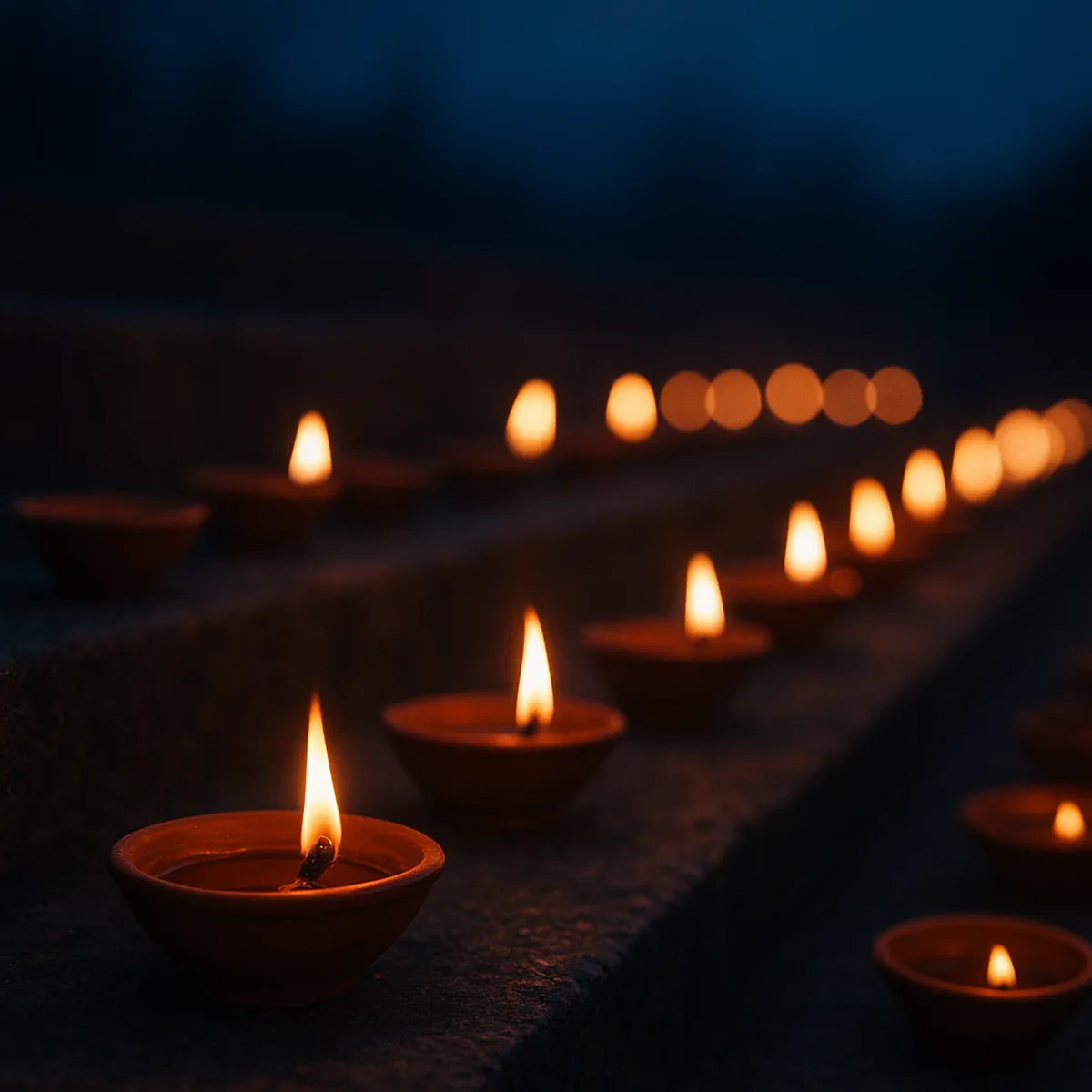
- What is lit: Small oil lamps called diyas, candles and electric lights brighten homes, courtyards and public spaces.
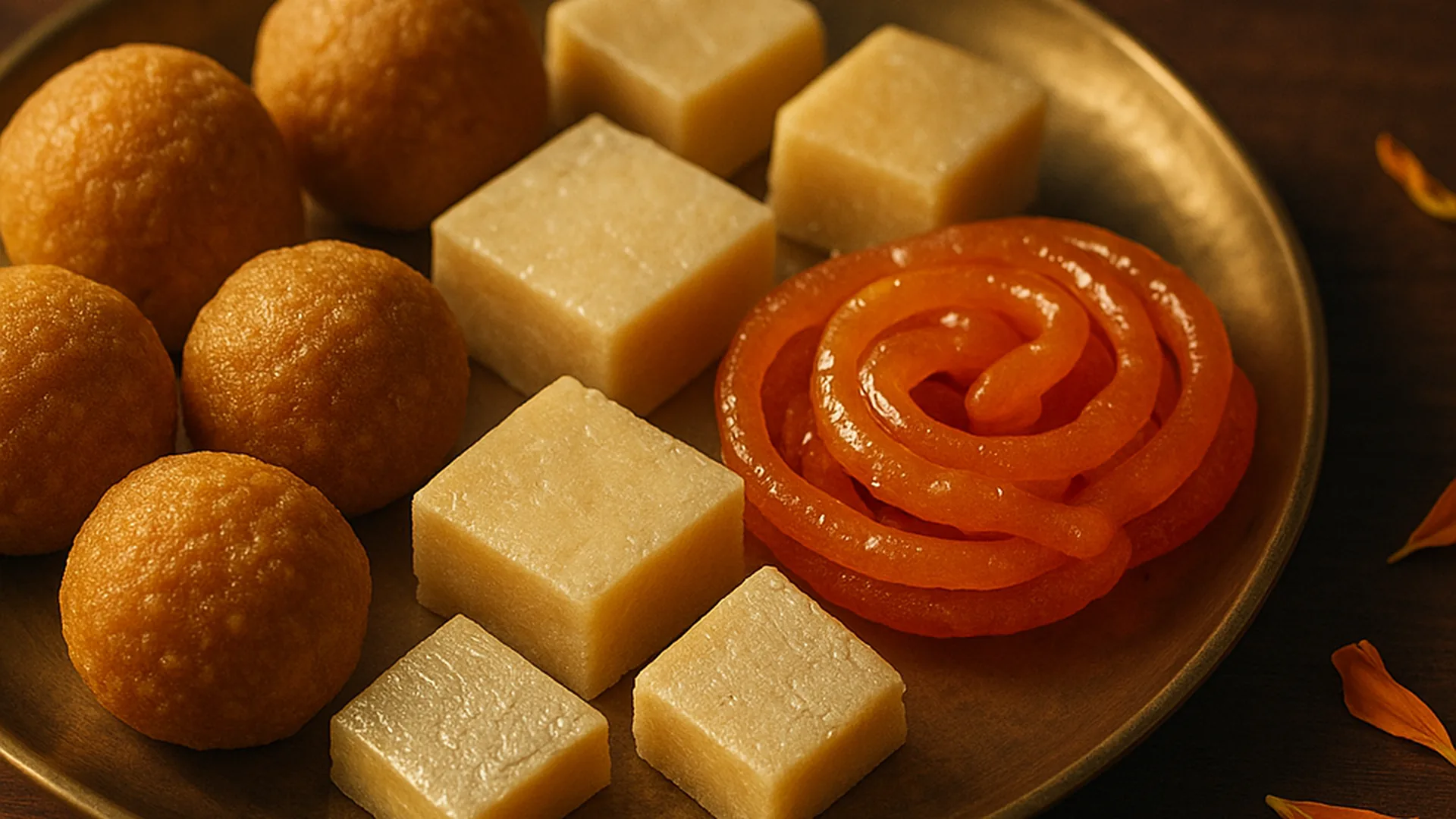
- Food: Families often share sweets such as ladoos and barfi, alongside savoury snacks and regional dishes.
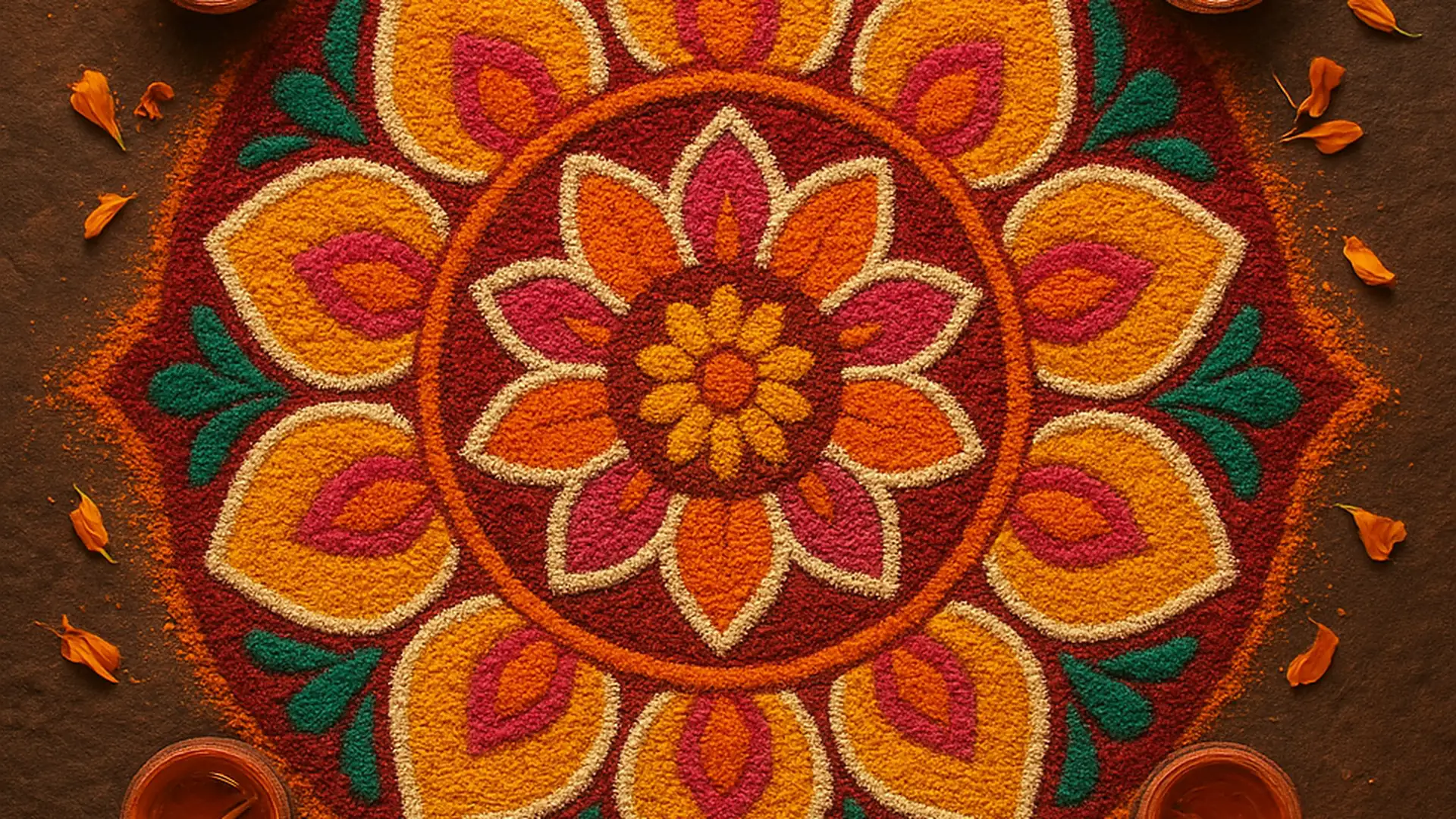
- Common practices: Home cleaning, prayers, rangoli designs, exchanging gifts and gathering with relatives are familiar parts of many celebrations.
- Who celebrates: Diwali is widely celebrated by Hindus, Sikhs and Jains, as well as by some Buddhist communities.
For an invitation or event, check the host community’s calendar and customs rather than assuming one format.
Common misunderstandings
Diwali is not the Hindu New Year everywhere. The festival may coincide with a new-year observance in some regional calendars, but Hindu communities do not all begin the year on the same date. In Gujarat, Bestu Varas is celebrated the day after Lakshmi Puja and marks the Gujarati New Year. That regional custom should not be treated as a universal rule for Diwali celebrations.
Diwali and Dussehra are also separate festivals, not two names for the same event. They occur at different points in the Hindu lunar calendar, and in 2025–2028 Dussehra falls about 18 to 20 days before Diwali. Their proximity can make them seem like one continuous occasion, but each has its own date and observances.
Finally, there is no single regional version of Diwali. The stories associated with the festival, the emphasis of prayers and the details of household customs differ across India and within diaspora communities. Some families foreground Lakshmi Puja, while others place greater emphasis on different local traditions. Differences in food, decorations and the way the festival is named or understood reflect this variety; they do not make one community’s observance the standard for all others. When comparing celebrations, it is more accurate to identify the region or community than to assume every practice is shared.
Independent cultural guide
From Dussehra to Diwali, Step by Step
Dussehra and Navratri open the autumn festival season and lead towards Diwali. Follow it in order, from nine nights to five days of lights.